
Who Is Krampus? The History, Origins, and Dark Folklore of Christmas
Who Is Krampus? The History, Origins, and Dark Folklore of Christmas
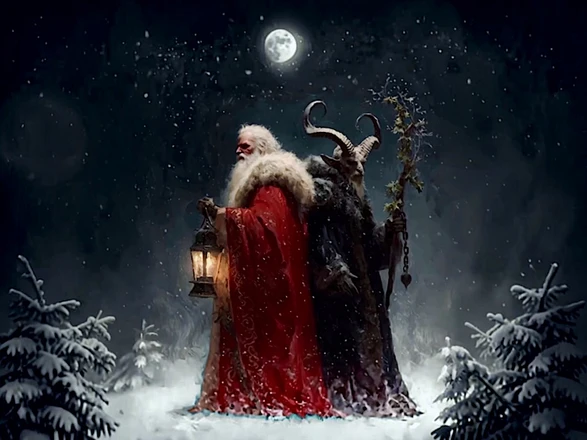
With enormous horns, shaggy fur, cloven hooves, and a long, frightening tongue, Krampus is one of the most recognizable figures in European winter folklore. He is also one of the strangest companions to appear during the Christmas season.
While Saint Nicholas rewards well-behaved children with treats and gifts, Krampus is the frightening figure who comes looking for those who have misbehaved. In the traditional stories of the Alpine regions of Europe, the two make an unlikely pair: one represents generosity and reward, the other warning and punishment.
But who is Krampus? Where did the legend begin? Is he an ancient pagan creature? Why does he carry chains and birch switches, and what happens during Krampusnacht?
The answers lead to a fascinating history of Alpine customs, European folklore, winter celebrations, and some wonderfully unusual Christmas traditions.
Who Is Krampus?
Krampus is a horned, devil-like creature from the folklore of the Alpine regions of Central Europe, particularly Austria and Bavaria. Related traditions and similar figures can also be found in neighboring parts of Europe.
He is traditionally associated with Saint Nicholas and the celebrations leading up to Saint Nicholas Day on December 6.
In the familiar tradition, Saint Nicholas rewards children who have behaved well, while Krampus frightens or threatens those who have not. His appearance is deliberately terrifying, making him a memorable counterpart to the kindly saint.
Krampus is usually depicted with:
- Large, curved horns
- Dark, shaggy animal fur
- A devil-like face and sharp teeth
- A long, pointed tongue
- Cloven hooves
- Heavy chains and bells
- A bundle of birch switches
- A basket or sack carried on his back
His appearance can vary from one Alpine community to another. Some masks have a single pair of horns, while others feature elaborate carvings, multiple horns, exaggerated expressions, and impressive details.
The name Krampus can refer to the folkloric creature itself as well as to the people dressed as Krampus during traditional winter celebrations.
Where Did the Krampus Legend Originate?
Krampus is most closely associated with Austria and the Alpine regions of southern Germany, particularly Bavaria, Salzburg, and Tyrol.
His exact origins are difficult to establish. Although modern accounts often describe him as an ancient pagan creature, the historical evidence is more complicated.
One important early reference comes from 1582, when a record from the Bavarian town of Diessen mentions people being paid for a practice described as hunting the Percht. This is evidence of an older masked or seasonal custom, but it does not describe the modern Krampus character or use the name Krampus.
Historical accounts from the seventeenth and eighteenth centuries also describe winter customs involving figures called Percht or Perchten in parts of Bavaria, Tyrol, and Salzburg.
The distinction matters. Perchten and Krampus are related through Alpine folklore, but they are not the same figure, and the historical records should not be treated as interchangeable.
The familiar Krampus tradition became more recognizable during the nineteenth century. In some Alpine villages, groups of young men wore horned wooden masks, fur costumes, and large bells to portray frightening devil-like figures.
The custom gradually spread and developed into the winter celebrations known today.
Rather than having one clearly documented beginning, Krampus emerged through a long history of regional customs, religious imagery, and folklore.
Is Krampus Pagan or Christian?
This is one of the most frequently asked questions about Krampus, and the answer is not as simple as many stories suggest.
Krampus is often described as a pre-Christian pagan creature who survived the spread of Christianity. His horns, animal-like appearance, and association with winter naturally bring to mind older European supernatural figures.
However, there is no conclusive historical evidence establishing Krampus as an ancient pagan god or proving that the modern Krampus tradition began as a specific pre-Christian religious ceremony.
The documented history of Krampus is closely connected to Alpine winter customs and Christian-era celebrations surrounding Saint Nicholas. Medieval European art and religious drama also featured frightening devil-like figures whose appearance bears a resemblance to later Krampus imagery.
Anthropologists Matthäus Rest and Gertraud Seiser have examined the historical evidence and challenged the popular claim that Krampus can be confidently traced to ancient pagan worship. Their research found that some of the familiar stories about his supposedly ancient origins were popularized by twentieth-century folklorists rather than established through historical records.
That does not mean older European customs had no influence. It means we should distinguish between historical evidence and later interpretations of folklore.
Krampus is best understood as a character whose traditions evolved over time, drawing on the rich world of Alpine winter customs, European storytelling, and religious imagery.
What Is the Connection Between Krampus and Saint Nicholas?
Krampus and Saint Nicholas are traditionally presented as two very different figures who appear together during the early days of December.
Saint Nicholas is based on Nicholas of Myra, a historical Christian bishop whose reputation for generosity became the foundation for gift-giving traditions throughout Europe.
In Alpine communities, Saint Nicholas visits children around December 5 and 6. He may carry a book containing information about their behavior throughout the year. Children who have been good receive small gifts, sweets, nuts, or fruit.
Krampus accompanies him as the frightening counterpart.
While Saint Nicholas represents kindness, generosity, and reward, Krampus represents the warning that misbehavior has consequences.
In some traditions, Krampus carries birch switches to threaten naughty children. Folklore also describes him carrying a basket or sack in which particularly troublesome children might be taken away.
The pairing of the two figures became an effective way of teaching children about good behavior through storytelling, seasonal visits, and public performances.
Their relationship also reflects a broader European tradition of portraying saints and devil-like figures together in religious performances and seasonal customs.
What Is Krampusnacht?
Krampusnacht means Krampus Night in German. It is traditionally celebrated on December 5, the evening before Saint Nicholas Day on December 6.
In communities that maintain the custom, people dressed as Krampus appear in the streets, visit homes, and participate in local festivities.
Traditionally, Krampusnacht was associated with the visits of Saint Nicholas. The saint rewarded well-behaved children, while Krampus frightened those who had misbehaved.
Today, celebrations vary considerably from one community to another. Some feature visits from Saint Nicholas and a small group of Krampuses, while others organize elaborate public processions.
The date remains one of the most recognizable parts of the Krampus tradition, particularly in Austria and neighboring Alpine regions.
What Is a Krampuslauf?
A Krampuslauf is a Krampus run or procession. The German word Lauf means run.
During these events, groups of people dressed as Krampus parade through town streets wearing elaborate masks and costumes.
The costumes can be extraordinary. Many are handmade and include carved wooden masks, animal horns, thick fur, heavy bells, and chains.
The sound is an important part of the experience. Bells ring, chains rattle, and performers stomp through the streets, creating an atmosphere that can be both theatrical and intimidating.
Some performers carry traditional birch switches and interact with spectators. Depending on the community, the event may be a relatively small local celebration or a large procession attracting visitors from far beyond the region.
In Austria, organized Krampus groups are sometimes known as Passen. These groups often have their own costumes, traditions, and local identities.
Although modern Krampuslauf events have become popular attractions, many remain closely connected to the communities that have maintained the tradition for generations.
Why Does Krampus Carry Chains, Bells, and Birch Switches?
The objects associated with Krampus are among the most recognizable parts of his appearance. Each helps create the frightening character found in traditional stories and modern processions.
Chains
Krampus is frequently depicted with heavy chains around his body. They add to his menacing appearance and reinforce his association with devil-like figures in European folklore.
Bells
Large bells are worn as part of many traditional costumes. Their loud sound announces the arrival of the Krampus group and adds to the dramatic atmosphere of a procession.
Birch switches
Bundles of birch twigs are among Krampus's most recognizable accessories. They symbolize the threat of punishment for children who have misbehaved.
The basket or sack
In traditional stories, Krampus carries a basket or sack on his back. Naughty children may be threatened with being carried away inside it.
These details have become defining features of Krampus imagery and appear in traditional costumes, artwork, and vintage postcards.
What Is the Difference Between Krampus and Perchten?
Krampus is sometimes confused with another group of supernatural figures known as Perchten. Both are associated with Alpine winter traditions and elaborate masked costumes, but they are not exactly the same.
Krampus is most closely associated with Saint Nicholas and the early-December tradition of rewarding good children while frightening those who have misbehaved.
Perchten belong to a broader collection of regional winter customs in parts of Austria and Bavaria. Depending on the local tradition, they may appear as frightening or beautiful masked figures associated with seasonal celebrations.
Some Perchten processions are traditionally connected with driving away harmful spirits or marking the transition between seasons.
The traditions have influenced one another over time, and their appearances can overlap. This is one reason the two are sometimes mistakenly treated as interchangeable.
The folklore surrounding Perchta and the Perchten deserves its own closer look, because it is a fascinating subject in its own right.
What Are Krampuskarten? The Fascinating History of Krampus Postcards
One of the most interesting chapters in Krampus history is the popularity of vintage greeting cards known as Krampuskarten.
During the late nineteenth and early twentieth centuries, illustrated postcards became an increasingly popular way to send holiday greetings. Krampus quickly became a favorite subject for some wonderfully unusual illustrations.
The cards often featured bright colors, exaggerated characters, humorous scenes, and mischievous messages.
Some showed Krampus carrying children away in baskets or threatening them with birch switches. Others depicted him alongside Saint Nicholas.
But the postcards were not always intended for children.
Some vintage Krampus postcards featured romantic, flirtatious, or suggestive scenes. Krampus might be shown courting a woman, pursuing someone, or appearing in a playful situation that had little to do with punishing naughty children.
These illustrations offer a fascinating glimpse into the humor and popular culture of an earlier era.
The postcards also helped spread the image of Krampus beyond the communities where the original Alpine traditions were practiced.
Today, vintage Krampuskarten are sought after by collectors. Their unusual artwork has become an important part of the visual history of Krampus.
Were Krampus Celebrations Ever Banned?
Yes. Authorities in parts of the Alpine region attempted to restrict or prohibit certain masked winter celebrations during the seventeenth and eighteenth centuries.
The bans are sometimes presented as proof that the Church was attempting to suppress ancient pagan rituals. However, historical research suggests that the reasons were more complicated.
Some celebrations involved large gatherings of young people, drinking, fighting, and disorderly behavior. Religious and civil authorities objected to aspects of these events and attempted to regulate them.
The existence of these restrictions does not, by itself, prove that the celebrations were pagan.
In fact, the historical record surrounding these customs is one of the reasons Krampus deserves careful research. Popular accounts sometimes repeat dramatic explanations that are not supported by the surviving evidence.
Why Has Krampus Become So Popular Around the World?
Krampus has experienced a remarkable resurgence in popularity, particularly outside Europe.
His unusual appearance and dark sense of humor make him a striking alternative to the familiar images of traditional Christmas celebrations.
In recent decades, Krampus has appeared in films, television programs, books, graphic novels, artwork, collectibles, and holiday events. Krampus parades and celebrations have also developed in cities throughout the United States.
For some people, Krampus represents a connection to European heritage and Alpine traditions. For others, he is simply a fascinating figure from folklore, a collectible character, or an unusual addition to the holiday season.
His popularity also demonstrates how traditions change as they travel. A regional winter custom can become an internationally recognized part of modern holiday culture while continuing to inspire new interpretations.
Is Krampus Real?
Krampus is a folkloric figure rather than a documented supernatural creature.
The traditions surrounding him, however, are very real.
For generations, people in Alpine communities have maintained Krampus customs through storytelling, seasonal performances, carved masks, costumes, and public celebrations.
The character continues to appear in December festivities, particularly around December 5, and remains an important part of regional winter folklore.
Like many legendary figures, Krampus lives on through the stories people tell and the customs they continue to practice.
What Does Krampus Symbolize?
At the heart of the Krampus tradition is the contrast between reward and consequence.
Saint Nicholas represents generosity and kindness, while Krampus represents the warning that actions have consequences.
Together, they reflect an old European tradition of using storytelling, symbolism, and seasonal ritual to teach lessons about behavior and responsibility.
But Krampus can also be appreciated beyond his traditional role as a frightening figure.
He represents the darker and more mysterious side of winter folklore: the strange supernatural characters, masked processions, and unusual stories that have been part of European seasonal traditions for generations.
Perhaps that is part of the reason he continues to capture people's imaginations. Not every holiday legend needs to be sweet, cheerful, or predictable.
Sometimes the most fascinating stories come from the shadows.
A Darker Side of Christmas Folklore
From the Alpine villages of Austria and Bavaria to modern celebrations around the world, Krampus has become one of the most fascinating figures associated with the winter holiday season.
His horns, chains, bells, and frightening appearance have made him instantly recognizable. His relationship with Saint Nicholas gives him a place in a tradition that continues to evolve, even as the precise details of his origins remain debated.
Whether encountered in an old postcard, a traditional Krampuslauf, a carved wooden mask, or a modern work of art, Krampus reminds us that European holiday folklore has never been limited to cheerful characters and familiar stories.
And that is precisely what makes his legend so fascinating.
Grüße vom Krampus!
Greetings from Krampus!
Frequently Asked Questions About Krampus
Who is Krampus?
Krampus is a horned, devil-like figure from Alpine folklore who traditionally accompanies Saint Nicholas and frightens children who have misbehaved.
When is Krampusnacht?
Krampusnacht is traditionally celebrated on December 5, the evening before Saint Nicholas Day on December 6.
Is Krampus older than Christmas?
There is no conclusive historical evidence proving that the modern Krampus tradition predates Christianity. Older European winter customs may have influenced the folklore, but the documented history is more complicated.
Is Krampus the same as the devil?
No. Krampus is a folkloric character who often has a devil-like appearance. He is not simply the Christian devil, although religious imagery influenced how he has been portrayed.
Why does Krampus carry a basket?
Traditional stories describe Krampus carrying a basket or sack in which he threatens to take away naughty children.
What is a Krampuslauf?
A Krampuslauf is a traditional procession in which people dress as Krampus in elaborate masks and costumes, often accompanied by bells and chains.
What is the difference between Krampus and Perchten?
Krampus is associated with Saint Nicholas and early-December celebrations. Perchten are figures from a broader collection of Alpine winter customs. Their appearances can overlap, but they are distinct traditions.
Where is Krampus celebrated?
Krampus traditions are particularly associated with Austria and Bavaria, with related customs found in neighboring parts of Europe. Krampus celebrations have also spread to other countries, including the United States.
What does Krampus symbolize?
Krampus traditionally represents warning and punishment, contrasting with Saint Nicholas, who represents generosity and reward. He is also an enduring symbol of the darker side of European winter folklore.
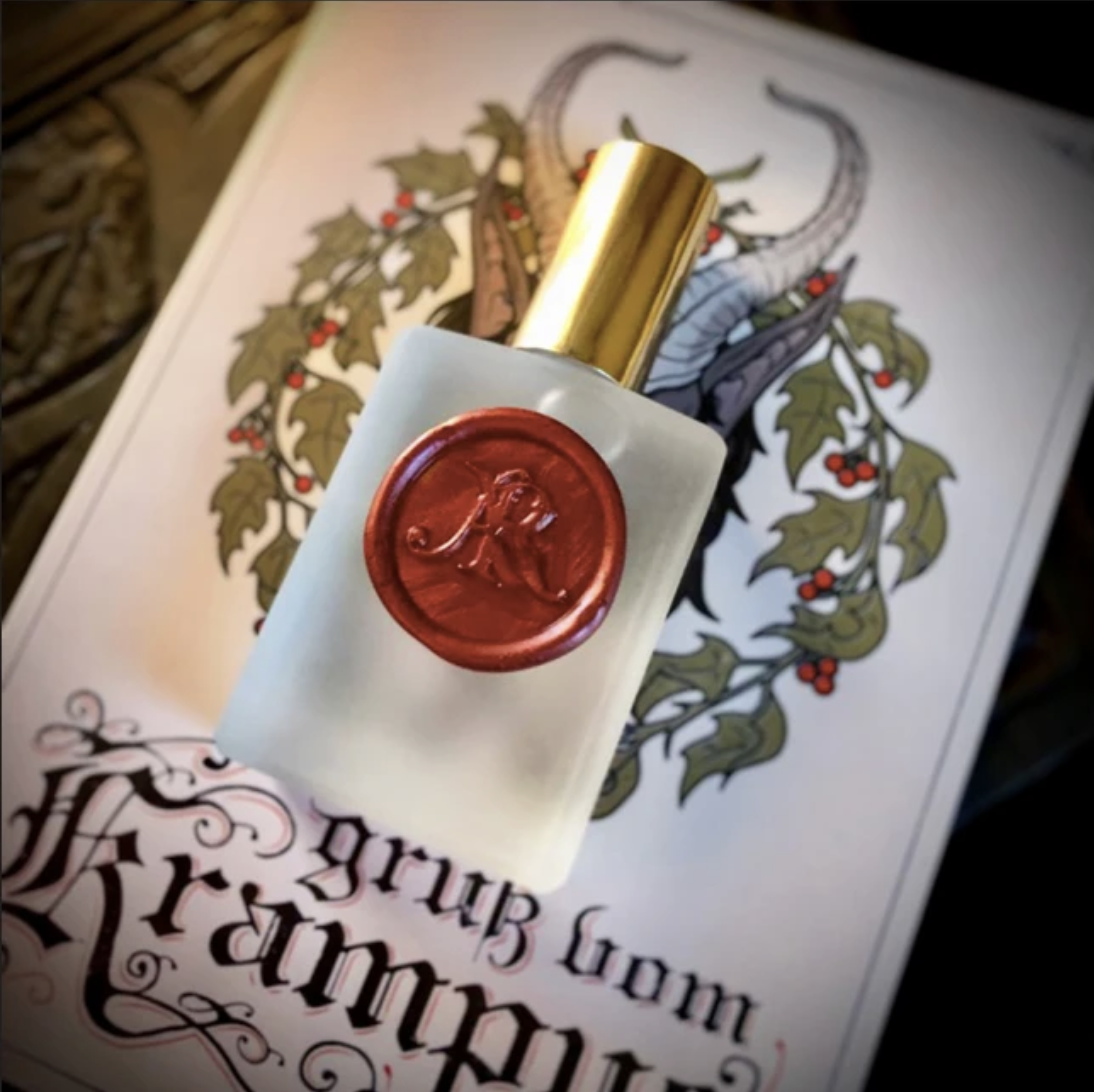
The legend may be centuries old, but Krampus is alive and well at White Magick Alchemy. We've given this legendary holiday troublemaker a fragrance of his own. Discover our unisex Krampus Perfume by Alchemy Ritual.
Further Reading and Historical Sources
For readers who would like to explore Krampus and Alpine winter traditions in greater depth:
- Library of Congress: Krampus: Origins and Development of a Winter Devil
- Matthäus Rest and Gertraud Seiser: The Krampus in Austria: A Case of Booming Identity Politics
- Austrian National Library: Auf Teufel komm raus! Der Krampusbrauch in Österreich
META: Who is Krampus? Discover the history, origins, Alpine folklore, Krampusnacht, Krampuslauf, and fascinating traditions behind the Christmas devil.